

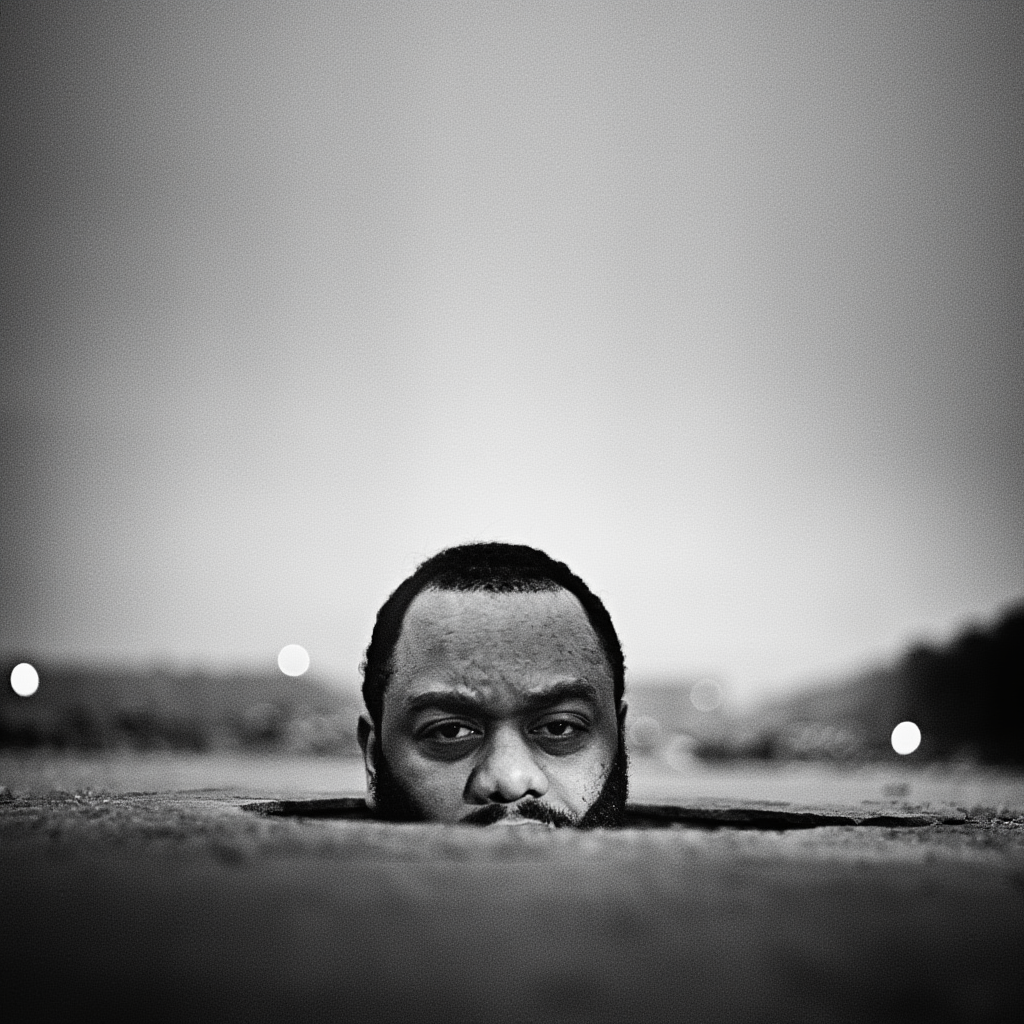
 Image 1 of 4
 Image 2 of 4
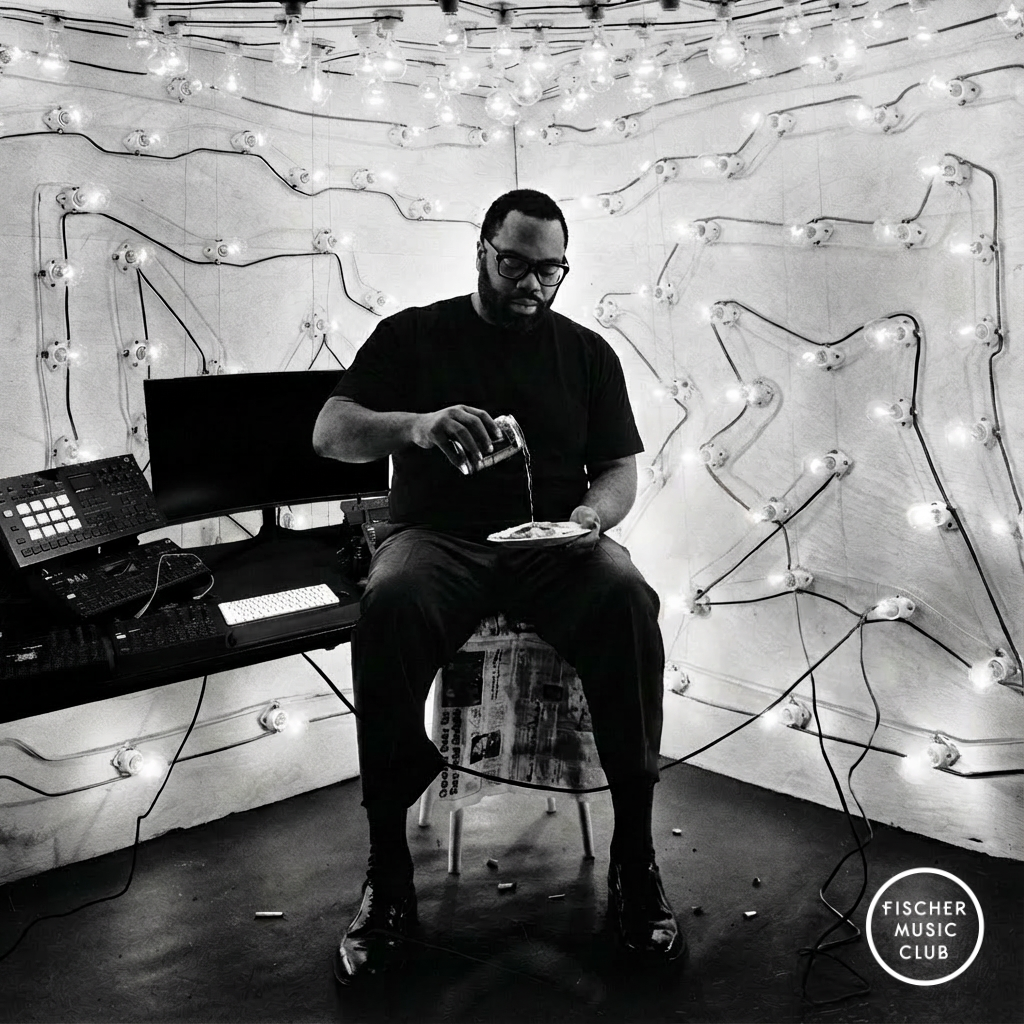 Image 3 of 4
 Image 4 of 4
The Holographic Man is the groundbreaking electronic jazz album from Leroy Basnight III’s Max Marineaux project. It’s a forward-looking work that interrogates identity, technology, and survival in the digital age. Drawing conceptual inspiration from Ralph Ellison’s novel, Invisible Man; The album interrogates visibility, identity, and survival themes, through a contemporary lens, asking what invisibility looks like when existence itself has become performative.
Seventy years after Ellison’s novel, Marineaux argues that the foundational Black experience remains unchanged, but is now mediated by technology. Social platforms promise visibility while rewarding spectacle over substance. Identity is amplified, flattened, and monetized. Presence becomes projection. If you don’t post, if you don’t perform for the algorithm, you don’t exist.
Sonically, The Holographic Man lives in this contradiction. Created entirely through electronic composition using computers, samples, step sequencers, MIDI controllers, and hardware; The Holographic Man blends abstract electronic textures with jazz’s improvisational DNA, creating music that feels volatile, intimate, and emotionally destabilizing. Traditional forms are referenced only to be fractured. Grooves emerge, dissolve, and reconfigure. Silence is treated as a compositional force. Melody exists not for comfort, but for revelation.
The album’s central metaphor, the hologram, reflects a modern condition where individuals are endlessly displayed yet materially unsupported. In parallel, Marineaux explores the idea of “slipping into the breaks,” a jazz-informed survival tactic influenced by Louis Armstrong, and explored by Ellison in his novel, where agency is found within the gaps of dominant systems rather than in direct opposition to them.
At its core, The Holographic Man is also a deeply personal work. Created after a period of withdrawal and trauma, the album mirrors Ellison’s narrative arc, moving from isolation toward re-engagement. It positions music not as escape, but as contribution, an assertion of purpose in an indifferent landscape.
With The Holographic Man, the Max Marineaux project introduces a new language for jazz, one that honors its intellectual and cultural lineage while pushing it into uncharted territory, adaptive, critical, and alive.
Purchase The Holographic Man today!
The Holographic Man is the groundbreaking electronic jazz album from Leroy Basnight III’s Max Marineaux project. It’s a forward-looking work that interrogates identity, technology, and survival in the digital age. Drawing conceptual inspiration from Ralph Ellison’s novel, Invisible Man; The album interrogates visibility, identity, and survival themes, through a contemporary lens, asking what invisibility looks like when existence itself has become performative.
Seventy years after Ellison’s novel, Marineaux argues that the foundational Black experience remains unchanged, but is now mediated by technology. Social platforms promise visibility while rewarding spectacle over substance. Identity is amplified, flattened, and monetized. Presence becomes projection. If you don’t post, if you don’t perform for the algorithm, you don’t exist.
Sonically, The Holographic Man lives in this contradiction. Created entirely through electronic composition using computers, samples, step sequencers, MIDI controllers, and hardware; The Holographic Man blends abstract electronic textures with jazz’s improvisational DNA, creating music that feels volatile, intimate, and emotionally destabilizing. Traditional forms are referenced only to be fractured. Grooves emerge, dissolve, and reconfigure. Silence is treated as a compositional force. Melody exists not for comfort, but for revelation.
The album’s central metaphor, the hologram, reflects a modern condition where individuals are endlessly displayed yet materially unsupported. In parallel, Marineaux explores the idea of “slipping into the breaks,” a jazz-informed survival tactic influenced by Louis Armstrong, and explored by Ellison in his novel, where agency is found within the gaps of dominant systems rather than in direct opposition to them.
At its core, The Holographic Man is also a deeply personal work. Created after a period of withdrawal and trauma, the album mirrors Ellison’s narrative arc, moving from isolation toward re-engagement. It positions music not as escape, but as contribution, an assertion of purpose in an indifferent landscape.
With The Holographic Man, the Max Marineaux project introduces a new language for jazz, one that honors its intellectual and cultural lineage while pushing it into uncharted territory, adaptive, critical, and alive.
Purchase The Holographic Man today!